
Retiring in Calabash: Is It the Right Move?
Retiring in Calabash can be a good move for people seeking a coastal, driving-based lifestyle with a well-established retirement-age population. The Calabash postal-city area has a median age of 60, with 25.29% of residents ages 65 to 74 (Attom Data, as of 2026-07). The practical tradeoff is that healthcare, shopping, and many social plans often require a vehicle. A sound decision should weigh housing costs, medical access, climate, coastal weather preparation, and North Carolina tax rules.
Calabash Retirement Highlights
- Median home sale price: $337,500 across the reported Calabash-area sales aggregate (Attom Data, as of 2026-07).
- Retirement income taxes: North Carolina does not tax Social Security benefits at the state level (North Carolina Department of Revenue).
- Hospital access: Full-service hospital care is available outside Calabash, so preferred providers, Medicare participation, and travel routes should be part of the housing search.
- Climate: Mild winters, humid summers, and a long outdoor season.
- Lifestyle draw: The Calabash River, waterfront dining, fishing, golf, and nearby beaches support an active coastal routine.
Calabash by the Numbers
- Median home sale price: $337,500 across the reported sales aggregate (Attom Data, as of 2026-07).
- Median resident age: 60 years in the Calabash postal-city area.
- Overall cost-of-living index: 125.6, with the U.S. national average set at 100.
- Property-tax relief: Qualifying older or disabled homeowners may be eligible for state programs, administered through the county, that reduce or defer a portion of property taxes.
Why Retiring in Calabash Appeals to Many Retirees
Retiring in Calabash appeals to people who want regular access to water, golf, casual dining, and outdoor activities without the pace of a larger coastal city. Adults ages 65 to 74 represent 25.29% of residents in the Calabash postal-city area, while residents ages 75 to 84 account for another 11.66%. That age mix can make it easier to meet neighbors with similar schedules and interests through community events, golf, dining, volunteering, and informal waterfront gatherings.
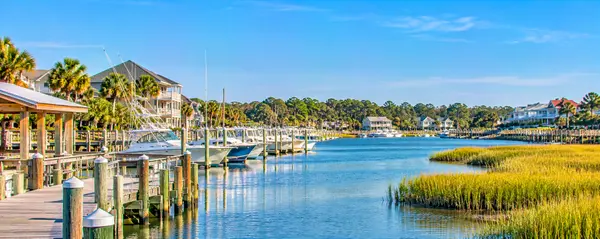
The Calabash River and waterfront restaurant district give the town a recognizable social center. Residents can spend time near the water, watch boating activity, meet friends for lunch, or enjoy short outings without planning a full-day trip. Calabash is not designed as a dense walk-everywhere downtown, but its smaller scale can work well for retirees who prefer local routines and a quieter setting.
Fishing, boating, golf, and beach outings can become part of a normal week rather than an occasional vacation activity. Crow Creek Golf Club is one nearby option for regular play, while the riverfront offers space for birdwatching, dining, and relaxed time outdoors.
Housing options range from established detached homes to golf-oriented properties, attached homes, and lower-maintenance residences. Browsing current Calabash NC homes for sale shows how location, lot size, amenities, and upkeep needs can shape a retirement move.
Cost of Living in Calabash
Calabash has an overall cost-of-living index of 125.6, compared with a national baseline of 100. Housing has an index of 124.6, food 124.1, transportation 125.8, healthcare 138.5, and utilities 138.2. Those figures make a complete retirement budget more useful than a purchase-price comparison alone.
For buyers, the reported $337,500 median sale price is a useful starting point, but ownership costs also include property taxes, homeowners insurance, possible association dues, maintenance, and coastal storm preparation. Renters should compare current lease terms carefully because pricing can vary by property type, location, lease duration, and seasonal demand.
Transportation is another important line item. Most grocery trips, medical appointments, airport rides, and leisure plans involve driving, so fuel, vehicle maintenance, and insurance deserve room in the monthly plan. Grocery and pharmacy needs are available in and around Calabash, while larger shopping trips and specialized services may require more travel.
Healthcare and utilities also deserve attention for households on a fixed income. The indexes do not predict an individual bill, but they suggest that prescription costs, Medicare plan choices, summer cooling, insurance deductibles, and regular fuel use should be evaluated before setting a long-term spending target.
Cost of Living: Calabash Compared With the National Average
Calabash costs generally run above the national baseline, especially for healthcare, utilities, transportation, and housing. The comparison below uses the Calabash postal-city area, while the national column uses the standard index baseline of 100 (Attom Data, as of 2026-07):
| Measure | Calabash | National average |
|---|---|---|
| Overall cost-of-living index | 125.6 | 100.0 |
| Housing cost index | 124.6 | 100.0 |
| Healthcare cost index | 138.5 | 100.0 |
| Transportation cost index | 125.8 | 100.0 |
| Utilities cost index | 138.2 | 100.0 |
These indexes are planning tools rather than personal budgets. Actual monthly costs depend on the home, insurance coverage, travel habits, household size, utility use, and any community dues or service fees.
Retirement Income & Taxes in Calabash
North Carolina can be favorable for retirees, although the final result depends on income sources, residency, and eligibility for specific tax programs. Social Security benefits are deductible from North Carolina taxable income, including benefits included in federal adjusted gross income.
Traditional pension payments, 401(k) distributions, and traditional IRA withdrawals may be included in North Carolina taxable income when they are taxable federally. Some qualifying federal, state, and local government retirees may qualify for a retirement-benefit exclusion under the Bailey decision. Eligibility depends on the retirement system, vesting history, and other requirements. The North Carolina Department of Revenue's Bailey guidance explains the qualifying-benefit rules.
Property taxes are set locally, and qualifying homeowners age 65 or older, homeowners who are totally and permanently disabled, and disabled veterans may be eligible for relief programs. North Carolina's elderly or disabled homestead exclusion, applied through the Brunswick County tax office, can exclude the greater of the first $25,000 or 50% of the appraised value of a qualifying permanent residence. For the 2026 tax year, the income limit for this exclusion is $38,800. Honorably discharged veterans with a qualifying service-connected total and permanent disability, or their unmarried surviving spouses, may instead qualify to exclude $45,000 of a permanent residence's appraised value, with no income limit.
The circuit-breaker program can limit qualifying property taxes to 4% of income for owners at or below $38,800, or 5% of income for owners earning up to $58,200, based on the 2026 limits. It generally requires at least five years of ownership and occupancy as a permanent residence, and taxes above the limit are deferred as a lien rather than forgiven. Applications for these programs are generally due by June 1, and households can typically use only one of the three programs. Retirees should review the current Brunswick County property-tax relief programs before building tax savings into a long-term retirement budget.
North Carolina does not impose a separate state inheritance tax or estate tax. Federal estate-tax rules may still matter for larger estates, so households with substantial assets should seek individualized tax and estate-planning advice.
Tax Snapshot for Retirees
- Social Security: North Carolina does not levy state income tax on Social Security benefits.
- Retirement withdrawals: Traditional pensions, 401(k) distributions, and IRA withdrawals may be taxable when included in federal taxable income.
- Bailey exclusion: Some qualifying government retirement benefits may receive special North Carolina tax treatment, subject to vesting and service-history rules.
- Property-tax relief: Eligible older or disabled homeowners may qualify for homestead exclusions or circuit-breaker relief, subject to income, ownership, residency, and filing requirements. The 2026 income limits are $38,800 for the homestead exclusion and $58,200 for the circuit breaker.
Healthcare in Calabash
Healthcare in Calabash can work well for retirees whose preferred doctors and appointment schedules fit a driving-based routine. Full-service hospital care and many specialists are located outside town, so retirees should map their likely routes before selecting a neighborhood. Novant Health Brunswick Medical Center is one regional hospital option, and Medicare's Care Compare tool allows consumers to review hospital quality, safety, patient-experience, and service information.
Drive time from central Calabash varies based on the destination, route, weather, and seasonal traffic. This makes location especially important for people with frequent appointments, mobility concerns, or a preference for a specific physician network.
Routine primary care, pharmacies, urgent care, and outpatient services are available across the coastal region. However, Calabash does not offer the same depth of specialty care found in a larger medical hub. People managing complex cardiac, oncology, neurological, or surgical needs should identify provider offices, referral networks, and transportation plans before committing to a location.
Medicare users should confirm that preferred physicians, hospitals, and prescription providers participate in their selected plan. For retirement planning, healthcare access is less about one building and more about whether routine care, specialist visits, and emergency travel fit comfortably into a household's regular driving routine.
Where Retirees Live in Calabash
Retirees in Calabash generally choose homes based on maintenance needs, golf access, water proximity, budget, and space for visiting family. Reported Calabash-area sales range from $35,000 to $3.409 million, showing how much condition, location, size, and amenities can affect pricing (Attom Data, as of 2026-07).
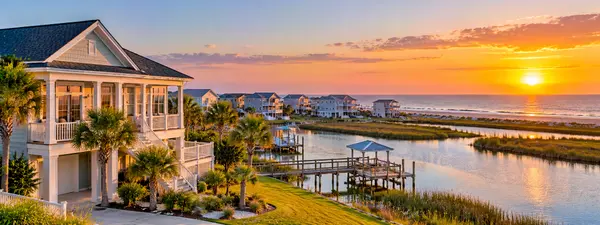
River-adjacent and waterfront-area homes suit retirees who value close access to the Calabash River, restaurants, and the town's most walkable pockets. These properties can appeal to active couples and downsizers who prioritize location, although insurance, flood exposure, and upkeep should be evaluated carefully.
Golf-oriented neighborhoods can fit retirees seeking recreation, open space, and opportunities to meet neighbors. Detached homes, attached homes, and townhome-style options may all be available in this category. Buyers should compare association dues, amenity access, exterior-maintenance obligations, and rental rules.
Lower-maintenance condos and townhomes can be practical for snowbirds, single retirees, and owners seeking a lock-and-leave lifestyle. Monthly dues are important alongside the purchase price because they may cover exterior maintenance, landscaping, insurance, or community amenities.
Established single-family neighborhoods may suit retirees who want a yard, storage, hobby space, or flexibility for visiting family. These homes can offer more privacy and room to personalize, although long-term exterior upkeep and driving needs should remain part of the decision.
For current Calabash owners thinking about downsizing within town, knowing what your present home could sell for and how to get a Calabash home ready for the market makes it easier to plan the timing of a purchase and a sale together.
Climate & Lifestyle: What Daily Life Looks Like
Calabash has mild winters, hot humid summers, and a long outdoor season. Average annual highs are about 73.56°F, while average annual lows are about 52.22°F. January daytime highs average about 56.21°F, and July highs average about 88.39°F. Summer heat, humidity, and regular rainfall can make early-morning or evening outdoor routines more comfortable for many retirees.
Coastal storm preparation is an essential part of homeownership. The Calabash postal-city area's hurricane-risk index is 425 against a national baseline of 100, so insurance coverage, flood-zone review, evacuation planning, and home preparation deserve careful attention. Rainfall averages 55.94 inches annually, which can also affect landscaping, drainage, and maintenance planning.
For leisure, residents can spend time around the Calabash River, book fishing trips, play golf at Crow Creek Golf Club, meet friends for waterfront dining, and make day trips to nearby beaches. Daily life is generally relaxed and car-oriented. It can suit retirees who enjoy regular outdoor activities, casual local dining, and a schedule shaped by weather and travel time.
Pro-Tip: Test your likely routes to healthcare, groceries, and the airport at the times you would normally travel. Daily drive time often matters more after the move than buyers expect.
Ready to Explore Retiring in Calabash?
Retiring in Calabash is easier to assess when you compare real housing options with your preferred daily routine, medical needs, budget, and comfort with coastal weather preparation. Bonnie Stotelmyer works with retirees and downsizers in Calabash, NC, using a consult-first approach from the first conversation to closing day. Call or text +1 (843) 983-6818, email bonnie@bonniescarolinahomes.com, or reach out here for a no-pressure conversation about the current market.
Frequently Asked Questions
Is Calabash a good place to retire?
Calabash can be a strong retirement choice for people who want coastal recreation, a quieter small-town rhythm, and an established older population. The postal-city area has a median age of 60, and residents ages 65 to 74 account for 25.29% of the population. It is best suited to retirees comfortable with driving for many appointments, errands, and activities.
How affordable is Calabash on a fixed retirement income?
A fixed-income plan should account for recurring expenses as well as the home's purchase price. The reported median sale price is $337,500, while the overall cost-of-living index is 125.6 against a national baseline of 100. Utilities, healthcare, homeowners insurance, vehicle costs, and storm preparation deserve close attention.
Is healthcare access adequate in Calabash for retirees?
Healthcare access can be workable when preferred providers and appointment schedules fit a driving-based routine. Full-service hospitals and many specialty services are outside Calabash, so buyers should verify physician locations, Medicare participation, and travel times before choosing a home.
What are the property tax and retirement income tax benefits in this state?
North Carolina excludes Social Security benefits from state taxable income, and some qualifying government retirees may receive Bailey-related tax treatment. Eligible older or disabled homeowners may also qualify for property-tax relief through the homestead exclusion (2026 income limit of $38,800) or the circuit breaker (2026 income limit of $58,200), subject to residency, ownership, and filing rules. Qualifying disabled veterans may exclude $45,000 of a home's appraised value with no income limit.
What types of housing are available for retirees in Calabash?
Retirees can consider waterfront-area homes, golf-oriented properties, townhomes, condominiums, cottages, and established single-family homes. The reported sales range of $35,000 to $3.409 million reflects substantial variation in location, condition, size, amenities, and maintenance requirements.
What is the social and lifestyle scene like for retirees in Calabash?
Calabash social life is shaped by waterfront dining, fishing, boating, golf, beach outings, and neighborhood gatherings. The town generally suits retirees who enjoy a relaxed pace, regular time outdoors, and driving to reach many activities. The Calabash River and nearby golf options provide recurring opportunities to meet friends and stay active.
Recent Posts


Broker/Listing Specialist/Team Leader License ID: 107150 and 354509
+1(843) 983-6818 | bonnie@bonniescarolinahomes.com